See more clearly
AI-assisted reconstruction helps reduce image noise and supports visibility of low-contrast detail. Automated brain and spine processing helps prepare consistent views for review.
FEATURED CT SOLUTION
Bring intelligent imaging, easier patient positioning, and dependable daily performance to your radiology department.
Explore the images ↓Discuss this CT system ↗︎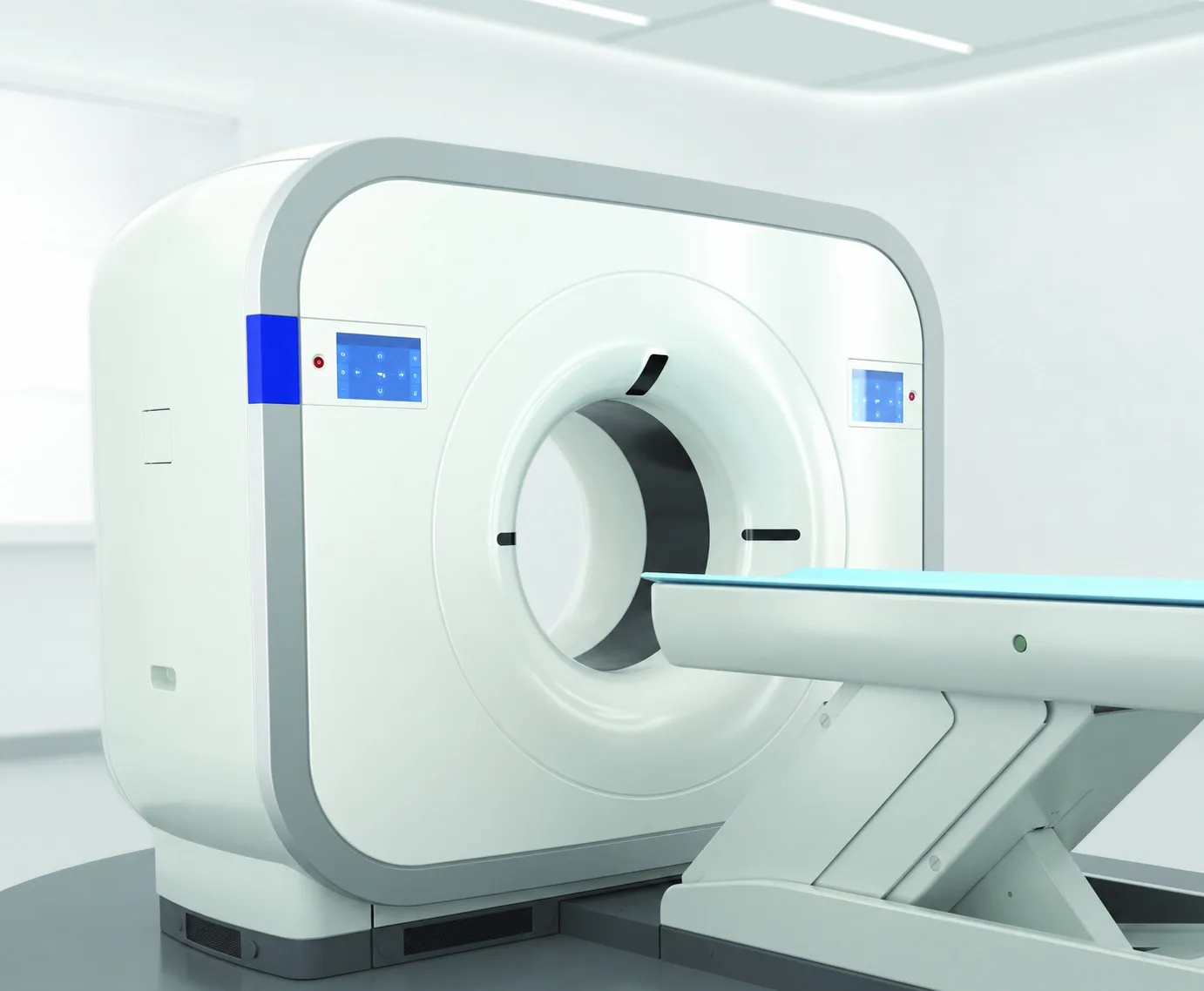
MORE FROM EVERY EXAM
AI-assisted reconstruction helps reduce image noise and supports visibility of low-contrast detail. Automated brain and spine processing helps prepare consistent views for review.
Gantry-side controls bring positioning and protocol selection into the scan room. Automatic positioning helps technologists spend less time on repetitive setup tasks.
A high-performance tube, direct cooling, and system monitoring support sustained daily use. Discuss the service and maintenance package for your hospital with our team.
AI-ASSISTED IMAGE QUALITY
Deep-learning reconstruction is designed to improve image quality while supporting dose-conscious protocols. It helps radiologists assess anatomy with less distracting image noise.
Iterative reconstruction and metal artifact reduction can further support image quality in appropriate examinations.
Dose and image quality depend on the patient, anatomy, clinical task, and protocol. A radiologist and medical physicist should determine the appropriate dose for diagnostic image quality. Examples illustrate capabilities and do not guarantee the same result for every examination.
FROM PREPARATION TO REVIEW
Practical assistance that helps your team prepare, acquire, and review examinations with greater consistency.
An AI-enabled camera assists vertical patient centering, helping reduce manual adjustments and variation between operators.
Automated anatomy detection and scan positioning simplify preparation and support consistent examination setup.
Deep-learning processing supports reduced noise and improved low-contrast visibility, with rapid reconstruction of reference protocols.
Automatically oriented multiplanar views follow anatomical landmarks to simplify post-processing.
Automatic vertebral labeling and multiplanar reconstruction help organize the spine examination for review.
Automatic needle tracking assists supported CT-guided procedures, helping the clinical team follow the needle during intervention.
PATIENT-FIRST PREPARATION
Camera-based positioning supports a range of clinical scan types. More consistent centering helps address a common source of unwanted image noise and unnecessary dose.
Remote operation also allows staff to manage supported positioning tasks from outside the scan room.
CONTROL AT THE PATIENT’S SIDE
Touchscreen controls allow technologists to move the table, select protocols, and complete many setup and end-of-scan tasks beside the patient.
Simple directional gestures support table movement while the technologist stays close enough to explain the examination and offer reassurance.
TAKE A CLOSER LOOK
Select any image for a larger view.
Clinical images are reproduced unchanged from the product literature. Equipment photographs have been retouched to conceal branding.
CLINICAL BREADTH
Lung screening should follow an approved screening program and its eligibility criteria. Available applications, patient protocols, and software options are confirmed for the proposed configuration.
BUILT FOR THE WORKING DAY
Dependable scanning starts with the components inside the system and the support plan around it.
The tube design supports demanding workloads, including continuous lung-screening sequences within supported operating conditions.
Direct anode cooling, a spiral-groove bearing, and a slotted anode help manage heat and the stress of repeated scanning.
Tube performance data and system sensors help identify developing issues and support maintenance planning.
Remote diagnostics can support troubleshooting and reduce the need for some on-site visits, subject to connectivity and the service agreement.
Discuss available upgrades and remote updates for the operating system, console applications, and firmware as your requirements develop.
LET’S PLAN YOUR CT SOLUTION
Tell us about your clinical workload, room, budget, and support needs. We’ll help you explore the system, available options, and implementation requirements.